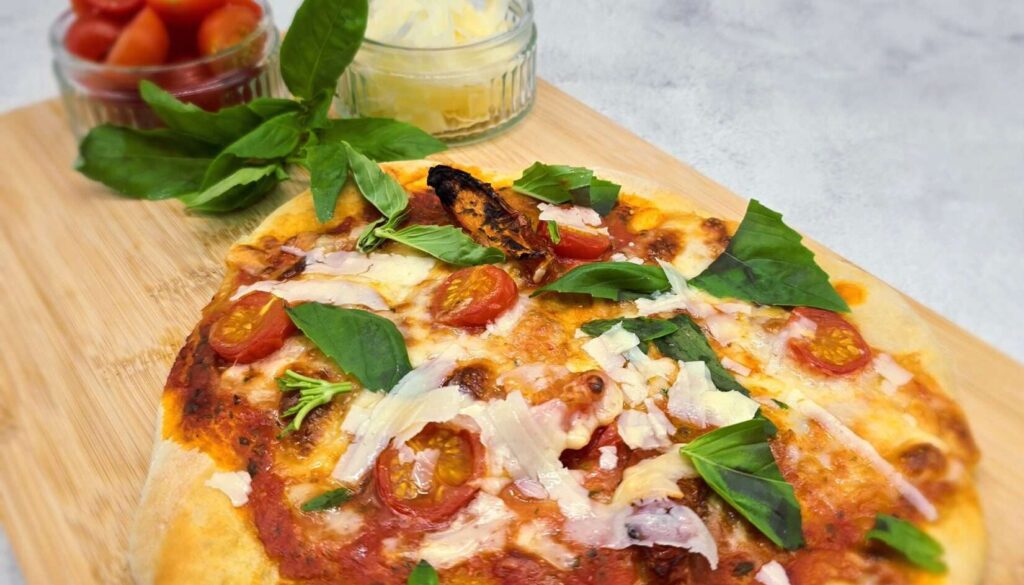
Margherita Pizza

Margherita Pizza
Equipment
- Scales
- Measuring Spoons
- mixing bowls large and small
- Rolling Pin or use a bottle
- Baking tray
- Sharp knife
- Vegetable peeler optional
Ingredients
Dough
- 150 g strong bread flour
- 1/2 tsp dried yeast
- 1/2 tsp salt
Sauce*
- 1 tbsp tomato puree
- 2 tbsp water
- 1 small garlic glove, crushed or use 1/2 tsp garlic paste
- 1/2 tsp dried oregano
Topping
- 4 - 5 cherry tomatoes halved
- 3 - 4 slices fresh mozzarella
- 25 g parmesan, shaved (handful) you can also use Grana Padano or extra mature cheddar (both less expensive than parmesan)
- Fresh basil leaves optional
Instructions
- Oven 220c
- Dough: Add the flour to a bowl and stir in the yeast and salt. Make a well in the centre, then pour in 100ml/g** of warm (blood temperature) water and the oil. Mix together to make a soft dough, then turn out onto a floured surface. Knead for around 5 mins until the dough is smooth. Pop the bowl over the top of the dough, and set aside whilst you make the sauce, halve the tomatoes and slice the mozzarella cheese. For the parmesan/strong cheddar, run the vegetable peeler down the thin edge to create ribbons.
- Sauce: Mix the tomato puree with the water, garlic and oregano. Set aside whilst you make the base.
- Knead the dough again on a floured surface and shape into a ball. Flatten with floured hands, then push and stretch the dough to a make a circle shape, or use a rolling pin. Keep the dough thin as it will rise when cooking. Lift the dough onto a floured/lined baking tray (using the rolling pin is easier).
- Spoon the sauce over the dough and spread around with the back of a spoon. Scatter over the tomatoes, then add the cheese (do not be tempted to use more mozzarella as it will make the dough soggy). Drizzle over a little olive oil (optional)
- Bake for around 10 mins until the edges are golden and underneath is crisp and edges are browned.
- Serve with the torn basil leaves and an extra drizzle of olive oil if wished.
Notes
The recipes are free to everyone to use (please give credits to us if you choose to use them), and always will be, but our non-profit organisation incurs many costs to keep it running. If you would like to help keep it going, please consider giving a donation. If you feel inspired to try more, why not invest in our Recipe Collection, available online or from our Eco Market.
Thank you
Card Donations PayPal Donations
Nutritional Benefits:
Tomatoes contain vitamins C and E, potassium, and may ease symptoms of asthma. Adding fat (as in olive, rapeseed or vegetable oil) boosts the absorption of lycopene (an antioxidant that helps to lower the risk of cancer, especially prostrate, heart disease and macular degeneration) and vitamins further. Cooking tomatoes also increases lycopene content. Incidentally, the peel, like many fruits and vegetables, is richer in nutrients than the flesh and the seeds are high in salicylates. Salicylates may help reduce inflammation and offer protection against certain diseases. However, it can cause a reaction in some people with sensitivities. As tomato puree and passata does not include seeds, it may be more tolerable for those who have tomato sensitivity.
The addition of cheese adds protein, essential for the body to make and repair all cells. Cheese offers calcium, important for strong bones and teeth. It is an excellent source of protein, vitamin D, calcium (needed for strong bones) as well as other various vitamins and minerals.
The herb basil has been used for thousands of years and has been long used in traditional medicine as a remedy for indigestion, nausea and stomach ache. It contains antioxidant flavonoid compounds that are anti inflammatory and may ease symptoms of irritable bowel syndrome. It is also mildly sedative. It is best added at the end of cooking to preserve its flavour and health properties.