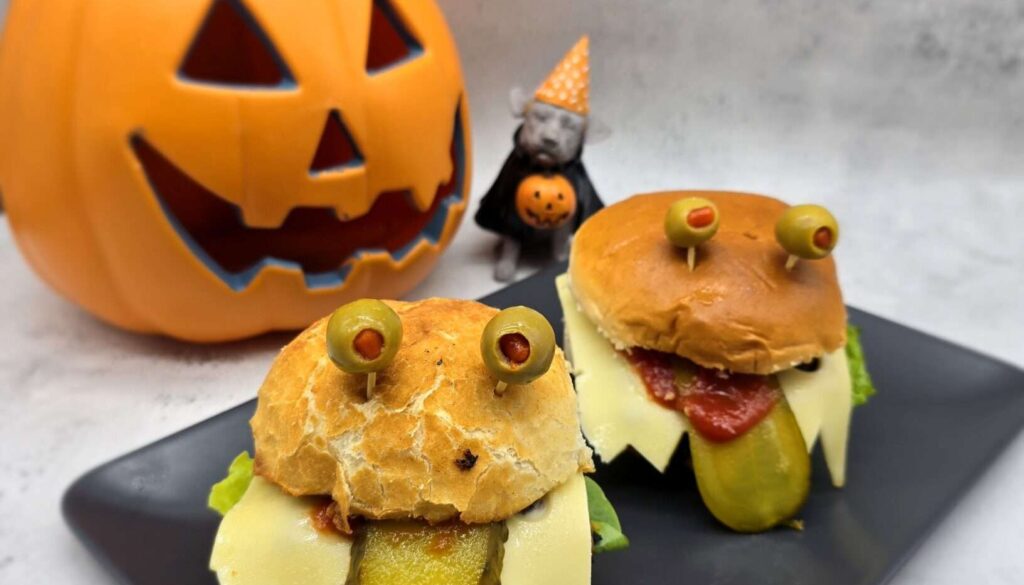
Monster Burgers
Around 8 million pumpkins are wasted each year in the UK (approximately 18,000 tonnes).
Most are used for carving and then simply thrown away, with only a small percentage of the flesh being eaten. Despite advertising as ‘carving pumpkins’ or ‘culinary pumpkins’, all are perfectly edible. Pumpkin waste isn’t just a missed opportunity for to make many dishes; it’s also an environmental concern. When food ends up in landfill, it produces methane, a powerful greenhouse gas.
I wrote this recipe with pumpkin in mind to add moisture and a tenderness to the burgers, however, please feel free to use grated veg such as carrots, butternut squash, beetroot (which will add a ghoulish red colour), courgette or parsnip. You could also use apple (try this with minced pork).

Monster Burgers
Equipment
- Grater or food processor
- Sharp knife
- chopping board
- Measuring Spoons
- Large frying pan preferably with a lid
- Cocktail sticks to hold the olive 'eyes'
Ingredients
Burgers
- 100 g grated veg we used pumpkin*
- 50 g breadcrumbs about 1 slice of bread
- 2 tbsp. mayonnaise
- 2 tbsp. tomato puree
- 1/2 tsp salt
- 1 small onion or 4 spring onions finely chopped
- 500 g minced meat 5 - 12% fat
- 1 tbsp. oil
To Serve
- 4 - 6 bread buns depending on how many burgers you make
- 4 - 6 slices of cheese
- 4 - 6 long sliced gherkins
- 4 - 6 lettuce leaves optional
- 8 - 12 olives
- Tomato ketchup
Instructions
- Prepare the ingredients. To make breadcrumbs, either grate the slice of bread on a grater, or pop in a food processor.
- Add the first five ingredients to a bowl and mix well. Stir in the onions then mash in the meat with a fork until all ingredients are combined.
- Form 4 - 6 balls, then flatten into burgers.
- If cooking in a frying pan, add the oil and once hot, placing the burgers in the pan, starting with the outside and work inwards. You may need to cook them in batches if using a small pan.
- Turn the heat to medium, and cook for 5 mins. Turn each burger over, cover with a lid or foil, and cook for another 5 mins. If your burgers are quite chunky, they may need a bit longer. The inside of the burgers should be cooked thoroughly with no pink juices.
- To cook in the oven, pre heat to 220c, add the burgers to an oiled tray and bake for 10 - 15 mins, depending on their size.
To Serve
- Cut points out of one side of the cheese to make ‘teeth’. Place the lettuce if using, on the bottom of the buns, add the burger then cheese. Place the gherkin so it is sticking out of the side of the bun like a tongue and add ketchup. Add the top bun, then using cocktail sticks, secure the olives to the top of the buns to represent the monster eyes.
Notes
The recipes are free to everyone to use (please give credits to us if you choose to use them), and always will be, but our non-profit organisation incurs many costs to keep it running. If you would like to help keep it going, please consider giving a donation. If you feel inspired to try more, why not invest in our Recipe Collection, available online or from our Eco Market.
Thank you
Card Donations PayPal Donations
Nutritional Benefits:
Pumpkin is rich in alpha and beta carotenes which are powerful phytonutrients shown to help prevent certain cancers, protect against type 2 diabetes, heart disease and inflammation. The carotenes are converted to vitamin A by the body which is essential for good eye health and vision. They are fat soluble so should be eaten with a little fat to help absorb the nutrients. Pumpkins are also rich in some B vitamins as well as vitamin C and E. These vitamins have an important role in maintaining healthy skin and protecting against sun damage.
Red meat offers a valuable source of iron (iron found in meat – haem iron, is more easily absorbed by the body than plant foods) which prevents anaemia, improves concentration and boosts immunity . Like all meat, it is a source of protein, which is important in order to help build, repair and renew all cells in the body. It also supplies many B vitamins and zinc (also important for immunity).
Pumpkin seeds are nutritional powerhouses which are rich in protein, zinc (an antioxidant mineral which boosts the immune system), iron (important for healthy blood cells and energy levels), omega 3 fatty acids, antioxidants, magnesium, selenium, calcium and many other nutrients . They also contain heart healthy polyunsaturated fatty acids and can benefit your heart, liver and immune system as well as helping to fight the onset of diabetes. They also contain tryptophan; an amino acid which is needed by the body to produce serotonin. This brain chemical helps regulate mood, appetite, digestion, sleep and memory. Low levels are linked to depression