Grain Paella
Few dishes evoke the warmth of a Mediterranean summer evening quite like paella. Born out of resourcefulness, this traditional Spanish staple was created to highlight the best of the season, adapting effortlessly to whatever ingredients the household had to offer.
It originated in the Valencian region. One likely theory of its origin, is that the dish was invented by Albufera rice farmers in the 15th century. In need of a meal that would be substantial, farmers would gather in the paddies to cook a one-pot dish with ingredients that were readily available in the surrounding fields. The word paella comes from the Valencian language (meaning “pan”), which traces back to the Latin word patella for a flat plate or shallow dish. Authentic paella did not contain seafood. Instead, it featured rabbit, chicken, snails, runner beans, tomatoes, and saffron to give the rice its signature golden color.As Valencia’s port grew and the dish gained popularity across Spain, new regional variations emerged. This led to the widely popular seafood paella (paella de marisco) and mixed paella (paella mixta), which combines meat and seafood.
Over time, cooking paella became more than just food. Farmers could catch up with friends and family as the scent of burning orange wood and sizzling oil filled the air, a tradition that continues in Valencia today.
In Spain, there is a saying; ‘No comes paella, vas de paella,’” . It represents the idea that eating paella is not just about consuming a meal, but is a deeply social experience where everyone participates in the cooking, socialising, and the overall preparation process. In other words, it is a social event!
This is so representative of all of our cooking workshops. Every individual, even little tots are involved in the process that not only stimulates conversation, builds better eating habits, builds skills and enables cultural preservation, i.e. the passing down of recipes from one person to another. Not forgetting, it also triggers the cephalic stage of digestion where your body starts to salivate and produce digestive juices in anticipation of the meal.
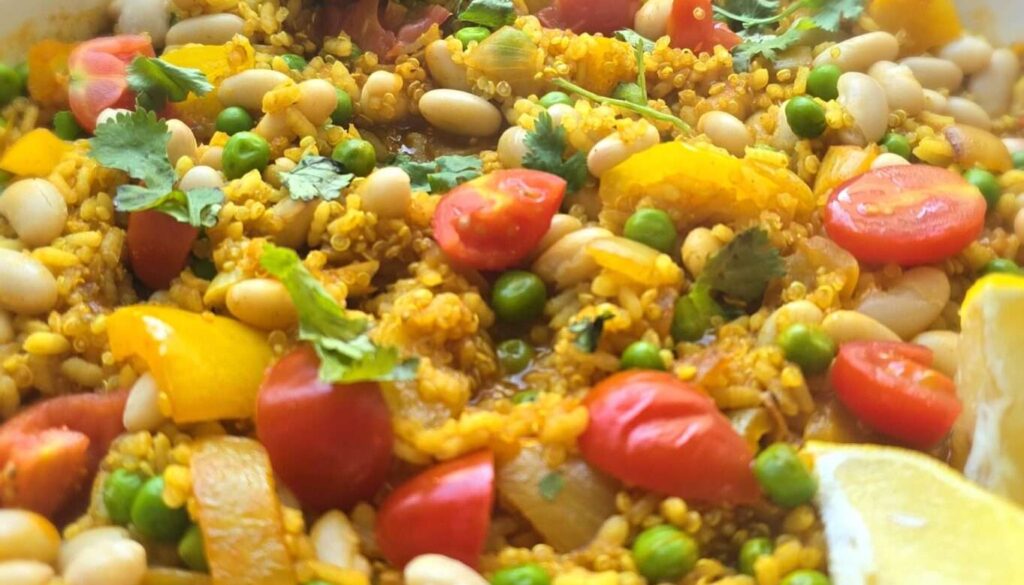
My take on paella trades strict tradition for nutrition and affordability. I’ve blended classic Bomba rice (paella rice) with high fibre, high-protein quinoa for a healthy upgrade. I also skipped the pricey saffron in favor of turmeric as a budget-friendly, accessible alternative that delivers a beautiful golden hue without breaking the bank.


Grain Paella
Equipment
- Sharp knife
- Chopping Board/surface
- Weighing scales
- Measuring Spoons
- Wide pan with lid
Ingredients
- 1 tbsp oil
- 1 onion chopped
- 2 garlic cloves sliced (or 2 tsp garlic paste)
- 200 g chopped veg e.g. pepper, courgette, aubergines, green beans, asparagus
- 150 g paella rice
- 100 g quinoa
- 1 tsp turmeric
- 1.5 tsp smoked paprika
- 1.5 tbsp tomato puree
- 600 ml vegetable or chicken stock
- 150 g frozen peas
- 400 g protein e.g. chunks of chicken thigh, chorizo, prawns, seafood mix, butter beans, chickpeas
- Lemon wedges to serve
Instructions
- Prepare all ingredients
- Sauté the Aromatics & Meat: Heat the oil in a large, wide (or paella) pan over medium heat. Add the onion and garlic, stirring for 3 - 4 minutes until softened. If you are using chicken and chorizo, add them now and cook until the chicken is browned.
- Toast the Grains & Simmer: Add the chopped vegetables, rice, quinoa, turmeric, paprika, and tomato purée. Stir for 1 minute to thoroughly coat the grains in the oil and spices. Pour in the stock, stir, and bring to a boil. Reduce the heat to low, cover with a lid, and simmer for 10 - 15 minutes. Do not stir. *
- Add Remaining Ingredients: Add your peas and choice of seafood/other protein. Add a little extra stock if needed (paella should be slightly coated in sauce). Give it a gentle stir, then cover again. Simmer for another 10 minutes until the liquid is fully absorbed, the grains are tender, and the protein is completely cooked through.
- To Serve: Serve hot with lemon wedges.
Notes
The recipes are free to everyone to use (please give credits to us if you choose to use them), and always will be, but our non-profit organisation incurs many costs to keep it running. If you would like to help keep it going, please consider giving a donation. If you feel inspired to try more, why not invest in our Recipe Collection, available online or from our Eco Market.
Thank you
Card Donations PayPal Donations
Nutritional Benefits
Quinoa is a complete protein, providing all nine essential amino acids needed to build and repair muscles and cells. It is also a good source of B vitamins, minerals and fibre, and is rich in antioxidants that may help reduce inflammation and protect cells from free radical damage. Some studies suggest quinoa may support healthier triglyceride levels, blood sugar management and gut health by encouraging beneficial gut bacteria and helping to reduce inflammation such as colitis.
Chicken is rich in B vitamins, zinc, sulphur and selenium. Zinc supports immunity, may help the body resist coughs and colds, contributes to hormone balance and supports heart health. Chicken is also a lean source of protein, essential for cell growth and repair. It provides tryptophan, an amino acid used to make serotonin, a brain chemical that can support sleep and help ease stress.
Onions are a nutrient-rich food that provide vitamin C and plant compounds with anti-cancer, anti-inflammatory and antibacterial properties. They may also help reduce the risk of heart disease and support a healthy insulin response, which is important because insulin resistance can increase the risk of type 2 diabetes.
Peppers are rich in vitamins C, E and B6. Vitamin C supports healthy cells and helps the body absorb iron, while vitamin E supports cell health and circulation. Peppers also contain compounds associated with anti-cancer benefits.
The sulphur compounds in garlic may help reduce the risk of heart disease and certain cancers, including colon, stomach and prostate cancers. Garlic may also help protect against stomach ulcers and has natural antibiotic, antiviral and antifungal properties.
Peas provide protein, as well as soluble fibre. They also contain B vitamins, vitamins C and K, and minerals such as phosphorus, manganese, magnesium, potassium and iron.