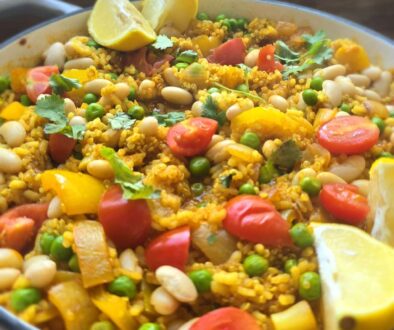
Cauliflower Rice Paella
This recipe is a take on a vegetarian paella but using cauliflower instead of rice. This dish is ideal if you need to cut down on carbohydrate intake or just wish to increase your plant food consumption.

CAULIFLOWER RICE PAELLA
Ingredients
- 1 head cauliflower about 500g made into cauliflower ‘rice’
- 1 tbsp. oil
- 1 red or yellow pepper chopped
- 5 spring onions or 1 onion, sliced
- 2 medium tomatoes chopped
- 1 400 g can chickpeas drained
- 100 g frozen peas
- 2-3 garlic cloves crushed (or 2-3 tsp. garlic paste)
- 2 tsp. smoked paprika
- 1/4 tsp sea salt
- Small handful fresh parsley chopped (or use 2 tsp. dried)
Instructions
- Wash all of the vegetables and rinse the starchy liquid from the chickpeas.
- Prepare all of the veg beforehand as you will need everything to hand.
- To make the cauliflower rice, either grate the whole head including the stalk, or break into florets and pulse in a food processor until it forms a grain like texture. Be careful not to leave the processor running as the cauliflower will turn to a paste.
- Add the oil to a large frying pan and heat on high. Toss in the peppers, spring onions, tomatoes, chickpeas and peas stirring constantly for 5 mins.
- Stir in the garlic, paprika and salt until all the veg is coated. Add the cauliflower rice to the pan stirring constantly. Cook for 5 - 10 mins until just softened. You don’t want to overcook this dish as soggy cauliflower appeals to no-one. Scatter over the parsley and serve with lemon wedges if wished.
Notes
- Add 300g diced chicken or vegetarian alternative after you add the oil. Cook thoroughly before adding the veg and proceed with the rest of the recipe.
- You may add 100g chopped chorizo at the same stage as the veg to give an even smokier flavour.
- Try 200g prawns at the same stage with 50g chopped chorizo.
The recipes are free to everyone to use (please give credits to us if you choose to use them), and always will be, but our non-profit organisation incurs many costs to keep it running. If you would like to help keep it going, please consider giving a donation. If you feel inspired to try more, why not invest in our Recipe Collection, available online or from our Eco Market.
Thank you
Card Donations PayPal Donations
Nutritional Benefits
Cauliflower is part of the cruciferous vegetable family (also called the brassica family) which includes broccoli, cabbage, brussels, kale etc. Studies suggest that cruciferous vegetables are an excellent source of natural antioxidants as well as good suppliers of essential vitamins (especially vitamin C which help boost immunity and vitamin K which helps to keep the skeletal system healthy and with blood clotting), carotenoids, soluble fibre, minerals, omega 3 fatty acids, folate and phenolic compounds. Brassica vegetables have the ability to help prevent chronic diseases including cardiovascular diseases, type 2 diabetes, neurodegenerative disorders and various forms of cancers and more. The antioxidants have the ability to reduce what is called oxidative stress and the presence of free radicals in our body. Free radicals have the potential to cause inflammation, neurodegenerative disorders such as Alzheimer’s and Parkinson’s disease, increase the signs of ageing and cell changes which can lead to cancer.
Chickpeas are full of fibre (essential for good digestive health and helps to lower the risk of heart disease), protein (helps in cell repair) folate, potassium and magnesium (helps to protect against heart disease).
Peppers are a rich source of vitamin C (for healthy cells and to absorb iron), E (for healthy cells and circulation) and B6 and again have anti-cancer properties.
Onions of all types are truly a superfood containing vitamin C and compounds which have anti-cancer, anti-inflammatory and antibacterial properties, helps to reduce the risk of heart disease as well as regulating insulin response (insulin resistance is often a precursor to developing type 2 diabetes).
The sulphur compounds in garlic which create its odour also offer many health benefits from minimising the risk of heart disease, certain cancers (colon, stomach and prostrate), can help to prevent stomach ulcers and is a natural antibiotic, antiviral and antifungal food.
The various vegetables bring vitamins, minerals, antioxidants and soluble fibre which help the body to function and prevent so many diseases and health conditions.