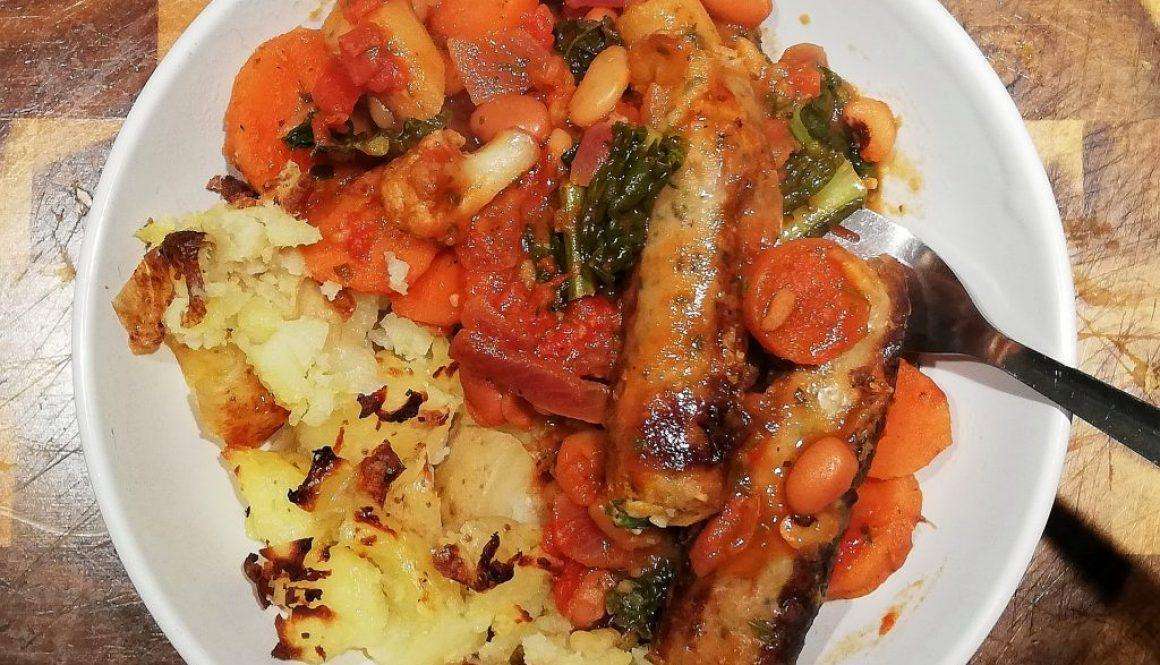
Sausage and Kale Stew
Such a simple family meal, quick to prepare and make.

SAUSAGE & KALE STEW
Ingredients
- 1 tbsp. rapeseed oil
- 8 good quality sausages*
- 1 - 2 onions chopped
- 2 garlic cloves crushed (or use 2 tsp. garlic paste)
- 1/2 tsp chilli flakes optional
- 1 tsp. dried oregano
- 6 medium carrots sliced
- 1 tbsp. flour/oats
- 1 400 g can mixed beans drained***
- 1 400 g can chopped tomatoes
- Large handful kale washed and chopped if in large leaves****
Instructions
- Heat the oil on a medium heat in a large casserole pan/lidded frying pan. Add the sausages and cook until browned, set aside.
- Stir in the onions to the same pan then cover and cook until softened but not brown. Add the garlic, chilli, oregano and carrots. Stir in the flour/oats then add the beans and tomatoes. Add water to the empty can until it is about 2/3 full. Swill, then pour into the pan and stir thoroughly. Lay the browned sausages on top of the vegetable mixture then cover and cook for 15 mins until the carrots are tender.
- Stir in the chopped kale, cover and cook for a further 5 mins until the kale is wilted.
- Serve with crushed potatoes; wash but don’t peel some potatoes (175 - 200g per person) and chop into large chunks. Steam or boil until cooked, drain then crush lightly with a fork. Drizzle with a little oil then pop in a hot (200c) oven for 15-20 mins until lightly browned.
Notes
*** You may use baked beans if wished, just drain off most of the sauce.
**** If you are unable to get hold of kale, just use another dark green leafy vegetable such as savoy cabbage.
The recipes are free to everyone to use (please give credits to us if you choose to use them), and always will be, but our non-profit organisation incurs many costs to keep it running. If you would like to help keep it going, please consider giving a donation. If you feel inspired to try more, why not invest in our Recipe Collection, available online or from our Eco Market.
Thank you
Card Donations PayPal Donations
Nutritional Benefits
Tomatoes contain vitamins C and E, anticancer properties and may ease symptoms of asthma. Adding fat (as in olive or vegetable oil) and cooking boosts the absorption of the valuable antioxidant lycopene and vitamins further.
There are so many different types of pulses (beans); all have a high protein content essential for all cell growth and repair. They contain B vitamins to unlock energy from food and a healthy blood and immune system and both soluble and insoluble fibre. Insoluble fibre ensures regular bowel movements whilst soluble fibre helps to prevent strokes and heart disease. They also contain phytochemicals which are cancer preventative.
Carrots are full of alpha and beta carotenes (antioxidants which help prevent heart disease, reduce the risk of certain cancers, lower the risk of infections and mop up free radicals; unstable molecules produced by the body in response to the environment, stress etc. which can cause harm to the body and cell malformation). Beta carotene is converted by the body into vitamin A; essential for growth, boosting immunity and healthy eyesight. As vitamin A is a fat soluble vitamin, cooking with a little oil helps the body to absorb more of this nutrient.
Kale is one of the most nutritious members of the brassica family (which include cabbage, broccoli, cauliflower and brussel sprouts) with the highest antioxidants of all vegetables. It is a good source of vitamin C which helps support the absorption of kale’s high iron content and vitamin K to support bone health and help with blood clotting. It also contains more calcium than any other vegetable. Other forms of dark green leafy vegetables such as savoy also contain these nutrients but not as many as kale.
Onions have been valued the world over for centuries for their anti-inflammatory and healing properties. The sulphur compounds in onions (as well as in their ‘relatives’ leeks, garlic, shallots etc.) have been shown to help lower blood pressure and discourage the growth of tumours. They are also high in vitamins C, B6, calcium, potassium and phosphorous. Phosphorous draws calcium into bones to keep them strong but other nutrients in onions have been shown to destroy osteoclasts which are cells that break down bone leading to osteoporosis
Tomatoes contain vitamins C and E, anticancer properties and may ease symptoms of asthma. Adding fat (as in olive or vegetable oil) and cooking boosts the absorption of the valuable antioxidant lycopene and vitamins further.
There are so many different types of pulses (beans); all have a high protein content essential for all cell growth and repair. They contain B vitamins to unlock energy from food and a healthy blood and immune system and both soluble and insoluble fibre. Insoluble fibre ensures regular bowel movements whilst soluble fibre helps to control and lower blood cholesterol, prevent strokes and heart disease. They also contain phytochemicals which are cancer preventative.
Carrots are full of alpha and beta carotenes (antioxidants which help prevent heart disease, reduce the risk of certain cancers, lower the risk of infections and mop up free radicals; unstable molecules produced by the body in response to the environment, stress etc. which can cause harm to the body and cell malformation). Beta carotene is converted by the body into vitamin A; essential for growth, boosting immunity and healthy eyesight. As vitamin A is a fat soluble vitamin, cooking with a little oil helps the body to absorb more of this nutrient.
The sulphur compounds in garlic which create its odour also offer many health benefits from minimising the risk of heart disease, certain cancers (colon, stomach and prostrate), can help to prevent stomach ulcers and is a natural antibiotic, antiviral and antifungal food.