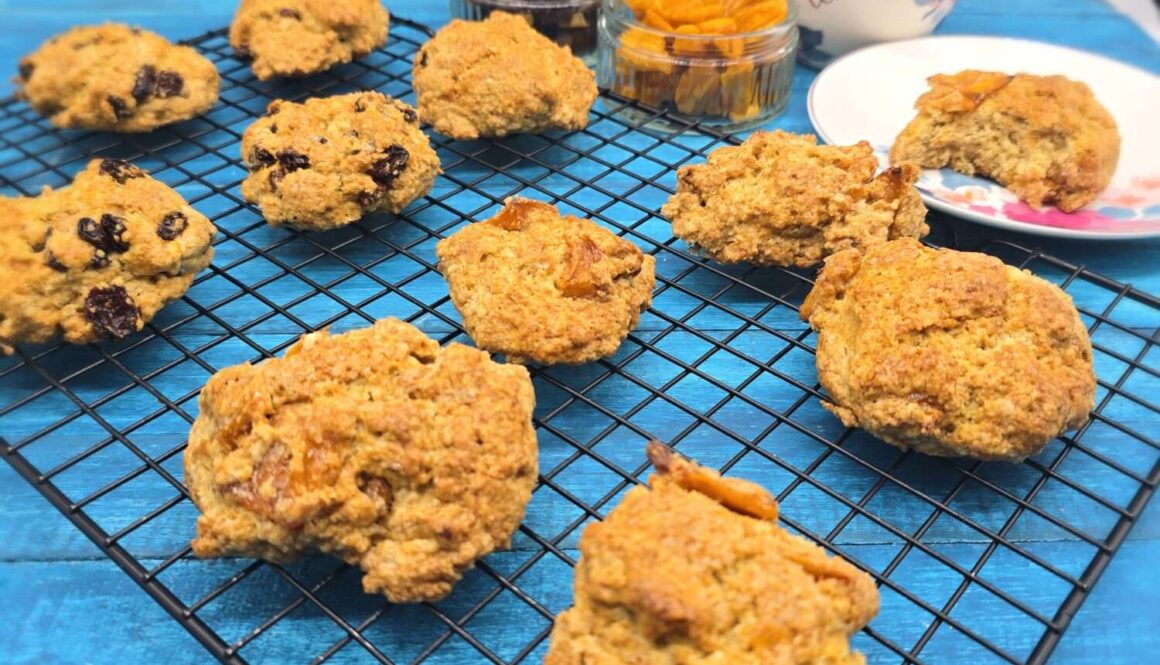
Rock Cakes
Rock Cakes are one of those old fashioned British bakes that are so reminiscent of childhood. I remember these fresh from the oven at my Nana’s house (where everything was devoured straight from the oven by all of her grandchildren!) and served at school.
These traditional tea time treats were were famously featured in the 1861 version of Mrs. Beeton’s Book of Household Management and promoted by the Ministry Of Food during World War II due to being made with less eggs and sugar than most bakes, when these foods were scarce.
More recently, they are featured in the Harry Potter film series, where Hagrid serves them to Harry and Ron. However, his baking skills, or lack of, meant that the bakes were so hard that they could crack teeth, so they politely declined.
Although there are many variations that can be made, they all have the same craggy, irregular shape (which is why they are called rock cakes or buns) with a light and soft texture; far removed from Hagrid’s version! They are very similar to scones, but the dough requires no rolling or cutting out. Instead, the dough is simply ‘dolloped’ on the baking tray.


Rock Cakes
Equipment
- Weighing scales
- Measuring Spoons
- Knife
- Baking tray
- Oven
Ingredients
- 125 g self raising flour
- 100 g wholemeal flour*
- 1 tsp baking powder*
- 100 g butter diced
- 50 g caster or brown sugar + 1 tbsp extra
- 125 g dried fruit see variations below
- 1 egg
- 1 - 2 tbsp milk
Instructions
- Oven 200cc
- Mix the flours and baking powder if using. Rub in the butter until it resembles breadcrumbs, then stir in 50g sugar and dried fruit of choice. You can also grate in the butter (best frozen) to make this process easier.
- Make a well in the centre then add the egg and 1 tbsp. milk. Beat the egg and milk together before mixing in with the flour to make a soft dough. Add a splash more milk if it seems too dry or add a small amount of flour if it is too wet.
- Using a teaspoon, drop heaped spoonfuls on a greased/lined large baking tray (or use two smaller ones). Brush the tops with a little milk and sprinkle over the extra sugar.
- Bake for 12 - 15 mins until golden. Transfer to a wire rack to cool slightly.
Notes
The recipes are free to everyone to use (please give credits to us if you choose to use them), and always will be, but our non-profit organisation incurs many costs to keep it running. If you would like to help keep it going, please consider giving a donation. If you feel inspired to try more, why not invest in our Recipe Collection, available online or from our Eco Market.
Thank you
Card Donations PayPal Donations
Nutritional Benefits
Using Wholemeal Flour contains more B vitamins (needed to release energy from nutrients and a healthy nervous system) and vitamin E content than white (helping wound healing, immunity and healthy eyes, skin and red blood cells) as well as insoluble fibre essential for good digestive health and stabilising blood sugars.
Using all wholemeal flour will create a denser bake. You may substitute the wholemeal flour for all white, but you will lose some benefits.