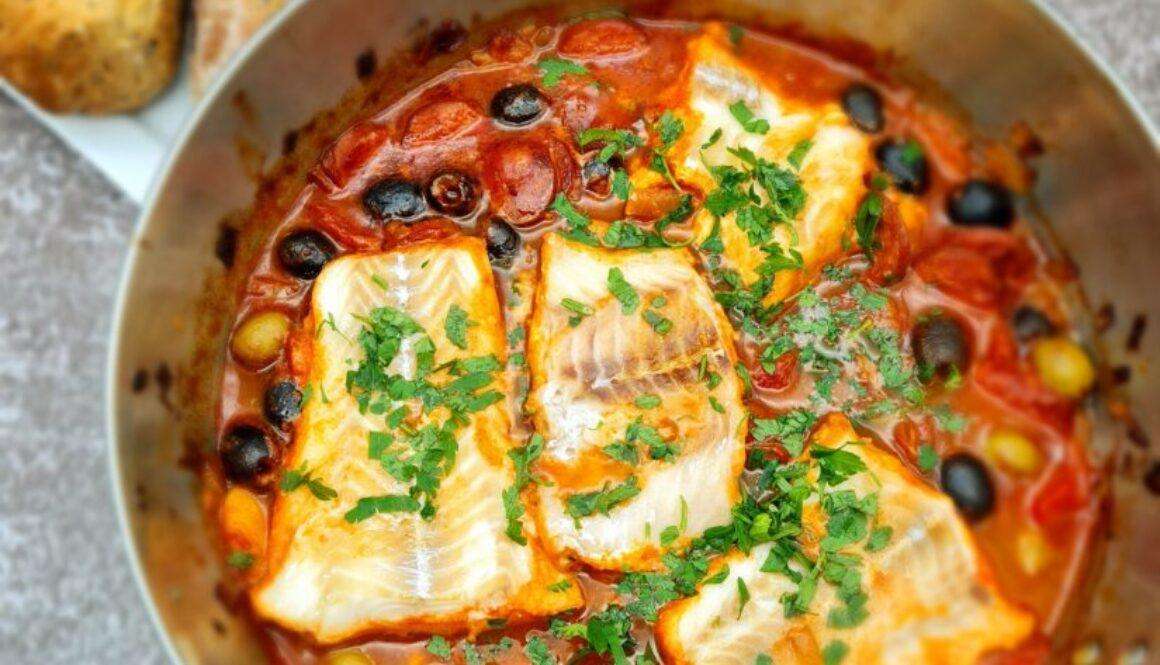
White Fish, Chorizo & Butterbean Stew
Sometimes, one wants a meal that only takes about half an hour, even better when it is one which is relatively inexpensive to make.
For this recipe, I chose to use frozen coley rather than cod, as this is readily available, and therefore more sustainable. It is also less expensive than cod or haddock. Buying frozen fish is often a cheaper option, and because it is often frozen at sea, this locks in the flavour and nutrients. It is also less likely to end up as food waste; something we all need to reduce in order to help protect our planet.
The addition of chorizo in this dish brings a smoky depth of flavour, which contrasts the creaminess of the white fish.

WHITE FISH, CHORIZO & BUTTERBEAN STEW
Equipment
- 1 large, deep frying pan with a lid If you don't have a lid, use a circle of tin foil over the top of the pan.
Ingredients
- 1 tbsp. oil
- 1 onion finely chopped
- 200 g chorizo, chopped or sliced you can use any type of chorizo
- 1 tbsp. red wine or balsamic vinegar* optional
- 400 g can of butterbeans
- 400 g can of chopped tomatoes
- 100 g olives, any colour** optional (if serving to children, choose stoned olives)
- 400 g skinned white fish fillets*** use frozen or fresh
- 1 handful fresh chopped parsley optional
Instructions
- Add the oil to a heated pan then stir in the chorizo and onion. Turn the heat to low, cover, and cook until the onion softens and has been coloured by the chorizo.
- Add the vinegar if using, then stir in the butterbeans, along with the liquid from the can. This will give extra flavour and help to thicken the sauce. Stir through the chopped tomatoes, then add water to the can (about half full), swill round to get the last bits of the tomatoes, and add that to the pan too. Stir well.
- Bring to a boil, then reduce the heat again and simmer for 10 mins to thicken. If using olives, stir them in now.
- Nestle the fish amongst the tomato sauce base, cover and simmer for 10 mins if using fresh fish, and 15 mins if using frozen. Check it is cooked by inserting a knife; it should flake easily.
- Scatter with chopped parsley and serve with crusty bread to mop up all of those delicious juices.
Notes
** Adding olives (along with the chorizo) means you should not need any seasoning as these both add flavour and that umami taste. If you don’t like, or don’t have olives, leave them out; the chorizo will still give that bit of punch.
***Cod and haddock are the most common types of fish, but to be more sustainable (and save money) try coley or pollack. There is very little difference in flavour. To save even more money, use frozen fish (yes, you can add them to the dish when frozen)
The recipes are free to everyone to use (please give credits to us if you choose to use them), and always will be, but our non-profit organisation incurs many costs to keep it running. If you would like to help keep it going, please consider giving a donation. If you feel inspired to try more, why not invest in our Recipe Collection, available online or from our Eco Market.
Thank you
Card Donations PayPal Donations
Nutritional Benefits:
Fish of all types, are great sources of protein (helping to build and repair cells). White fish contains many B vitamins (protecting against heart disease) as well as being a source of iodine (helping to enhance IQ and healthy thyroid function-iodine deficiency has been linked to stunted growth and poorer intelligence), phosphorous and selenium.
Butter beans like all pulses offer both soluble fibre and insoluble fibre. Soluble fibre helps to lower bad LDL cholesterol , prevent blood sugars from rising rapidly and prevent heart disease. Both fibres are essential for good digestive health. They are also a source of B vitamins, protein, iron and calcium.
Tomatoes contain vitamins C and E, anticancer properties and may ease symptoms of asthma. Adding fat (as in olive or vegetable oil) boosts the absorption of the valuable antioxidant lycopene and vitamins further as well as cooking. The vitamin C content helps the body absorb to iron from the beans.
Onions have been valued the world over for centuries for their anti-inflammatory and healing properties. The sulphur compounds in onions (as well as in their ‘relatives’ leeks, garlic, shallots etc.) have been shown to help lower blood pressure and discourage the growth of tumours. They are also high in vitamins C, B6, calcium, potassium and phosphorous. Phosphorous draws calcium into bones to keep them strong but other nutrients in onions have been shown to destroy osteoclasts which are cells that break down bone leading to osteoporosis.