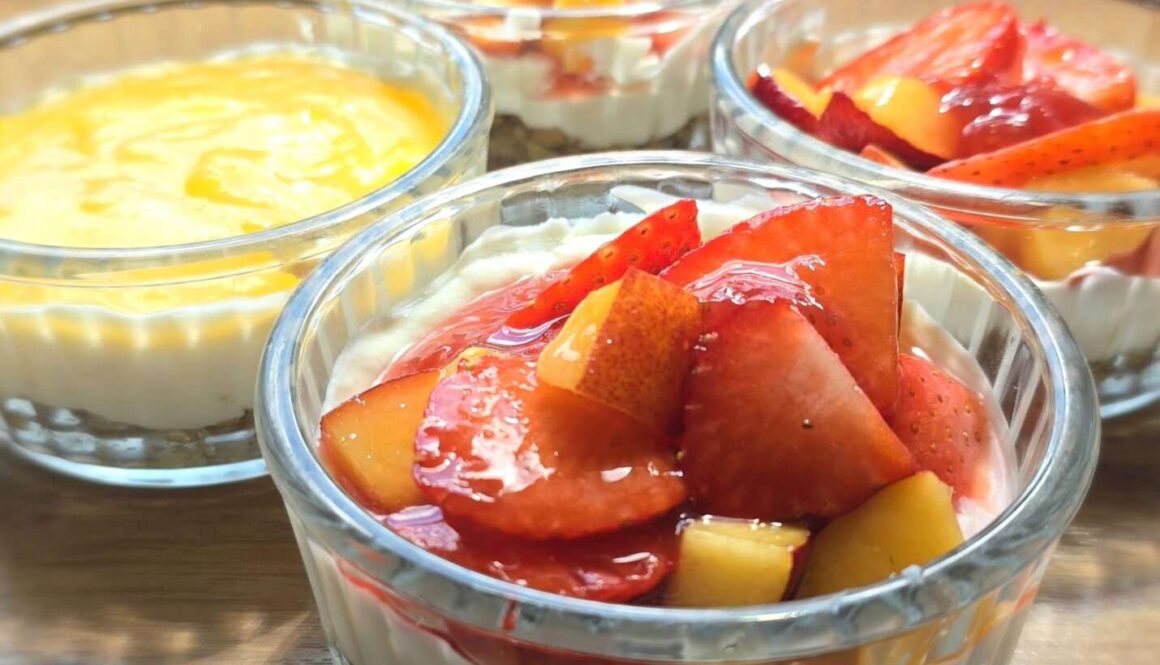
Cheesecake Pots
This simple dessert recipe is so easy to prepare with no cooking needed (a boon when the weather is hot!) and no aching arms from whisking cream.
I’m a big fan of shortcuts and making little tweaks to make food that bit more nutritious, but every bit as delicious. Swapping the traditional digestive biscuit base for oats, and cream for Greek yogurt not only means this dessert has more nutritional benefits, but also is a lot lighter than most cheesecakes.
This recipe is made in smaller containers, meaning they are already portioned, just ready to dive in if you cant wait for them to chill!


Cheesecake Pots
Equipment
- Large Bowl
- Measuring Spoons
- Weighing scales
- Knife
- Chopping Board/surface
- Chiller/Fridge
Ingredients
BASE
- 75 g butter or coconut oil melted*
- 1 heaped tbsp honey
- 150 g oats
CHEESECAKE LAYER
- 250 g cream cheese
- 50 g honey
- 100 g Greek yogurt
TOPPING
- 300 g soft fruit chopped (e.g. strawberries, blueberries, raspberries, peaches)
- 2-3 tbsp jam
- ½ tbsp water
Instructions
METHOD
- Add the melted butter to a bowl and stir the honey. Add the oats and mix well.
- Press into 4 ramekins or 2 x 10cm containers or a lined loaf tin. Pop in the freezer to chill quickly to set.
- Meanwhile, mix the cream cheese with the honey, then stir in the yogurt.
- Spoon this equally over the oat base between the ramekins. Pop back in the freezer.
- Wash and chop your desired fruit. Set aside in a bowl.
- Mix the jam with a little water to loosen it then stir it through your fruit.
- Spoon this over the cheesecake layer.
Notes
The recipes are free to everyone to use (please give credits to us if you choose to use them), and always will be, but our non-profit organisation incurs many costs to keep it running. If you would like to help keep it going, please consider giving a donation. If you feel inspired to try more, why not invest in our Recipe Collection, available online or from our Eco Market.
Thank you
Card Donations PayPal Donations
Nutritional Benefits:
Dairy foods (butter, soft cheese and yogurt) contain fat soluble vitamin A and D as well as calcium; all important for good bone and tooth health. They are a source of vitamin B12 and protein.
They DO contain saturated fats, but these have been found to have little effect on the cardiovascular system (not like previously thought). There is growing evidence that the fats in dairy food, eaten in moderation, may reduce the risk of heart disease and type 2 diabetes.
Oats: Offers sustainable energy, vitamin E, soluble fibre and are known to help raise good HDL cholesterol. They contain plant chemicals and antioxidants which help to reduce the risk of cancers. They have a low glycaemic index that helps to keep blood sugar levels steady.
Strawberries: Antioxidant vitamins C and manganese for healthy bones, soluble fibre for a healthy digestive system and helping to prevent type 2 diabetes. They may also be cancer preventative and help to fight bacteria.
Raspberries are a good source of vitamin C (essential for the growth and repair of tissues as well as helping maintain a good immune system) and also soluble fibre. Berries are best eaten raw as some of the nutrient content is destroyed when cooked but many are still retained. All the more reason to eat a few whilst cooking!
Peaches are rich in vitamins A and C, that helps the body protect against sun damage, boosts immunity and collagen production. Like all orange/yellow produce, they are abundant in beta carotene, which the body converts to vitamin A – essential for good eye health